
How to Play Tower Rush Well
Tower Rush rewards a successful build with a rising multiplier, but Cashout is the only way to secure an unfinished round before a floor collapses.
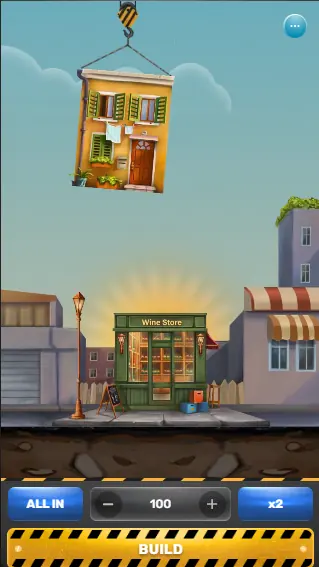
Tower Rush is built around a simple decision loop: place a bet, press Build, watch the multiplier change, then either take the current amount with Cashout or build again. Every extra floor keeps the unclaimed result exposed to a collapse, so a sensible plan starts with a risk limit rather than a promise of profit. This guide covers the round flow, practical tactics, bonus floors, payout examples, and the mistakes that can make a session run away from you.
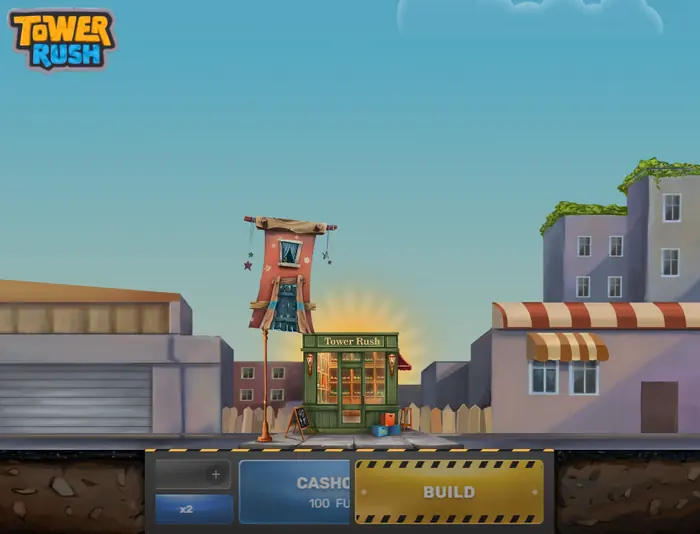
Tower Rush Rules at a Glance
A round begins with a stake between 1 and 100. Pressing Build starts the next construction step: the floor is either placed successfully or the build ends in a collapse. After a successful placement, the potential payout changes according to the displayed multiplier, while the accumulated result remains at risk until you choose Cashout.
Cashout ends the round and credits the current amount to your balance. If you build again, the next floor can still collapse, in which case the unclaimed amount is lost. The winning amount is calculated as stake multiplied by the applicable multiplier.
For a broader Tower Rush overview, start with the game information on our Home page.
A Practical Plan for Each Round
Set two boundaries before the first Build: the stake you can afford and the point at which you will leave. A short Cashout target, combined with a separate session loss limit, makes it easier to avoid impulsive decisions when a successful floor tempts you to continue.
- Choose a stake that does not require you to stretch your budget.
- Decide the Cashout condition before the construction starts.
- If a floor collapses, do not raise the next stake simply to recover the loss.
This is a way to manage exposure, not a method for controlling a random result. The game has an RTP of 96.17% to 97% and Medium-High volatility, so short sessions can still produce very different outcomes.
The Conservative Approach
A conservative round takes a modest successful result and secures it early. You might set a small multiplier range, reach an acceptable payout, press Cashout, and pause before deciding whether to start again. That reduces the time your accumulated amount stays exposed.
It does not guarantee a positive result. The value of the approach is narrower risk, not a changed probability or improved RTP.
The Higher Risk Approach
Continuing to build leaves the current payout in play for the chance of a larger multiplier. Before another Build press, ask whether you can accept losing the entire unclaimed amount if the next floor collapses. A longer chain means more time under risk.
Previous successful rounds do not make the next floor safer. If the session has gone well, review the original plan instead of treating that streak as a signal to increase the stake or keep building.
Choosing the Right Cashout Moment
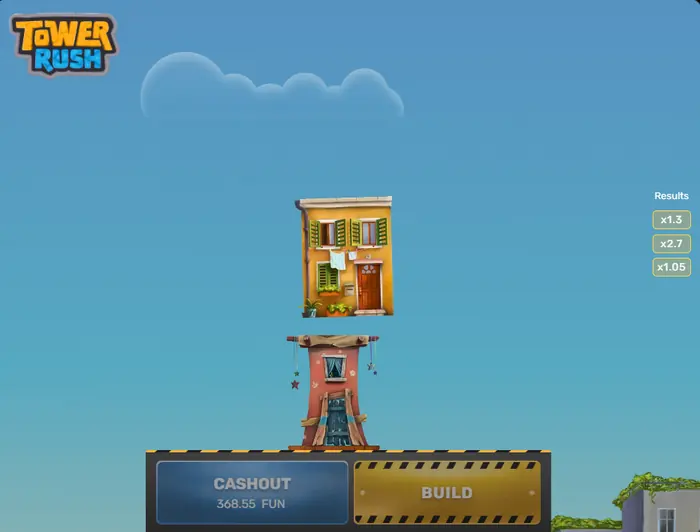
Cashout makes sense when the current amount meets the target you set before the round. Once pressed, the amount is fixed and the round ends; delaying only because you want to win back an earlier loss adds pressure without giving you a reliable forecast.
Visual patterns and recent results are not predictions. For a session, write down both a time limit and the amount at which you will stop after a losing run. If you are comparing operators, our guide to Real Money casinos can help you review withdrawal conditions alongside the game itself.
What Build Actually Does
Build opens the next construction stage. If the floor is placed, the game can apply a higher potential multiplier; if it collapses, the round ends with the unclaimed result at risk. In a successful sequence, each new floor's multiplier is applied to the accumulated win.
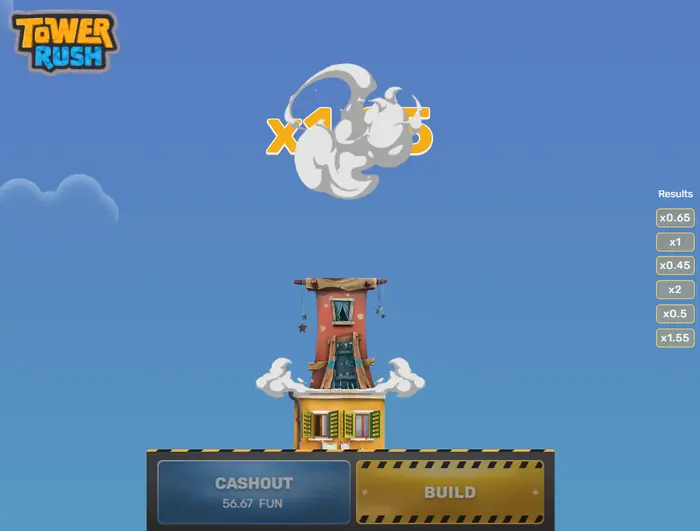
That makes Build a fresh choice with an uncertain outcome, not a controllable progression system. The maximum win is 10,000; once that limit is reached, continuing can still put the accumulated amount at risk without increasing the maximum.
Multipliers and Payout Examples
| Stake | Multiplier | Amount before deductions | Illustrative use |
|---|---|---|---|
| 1 | ×1.5 | 1.5 | A small result that could fit an early Cashout plan |
| 5 | ×2.0 | 10.0 | An example exit point chosen in advance |
| 10 | ×2.5 | 25.0 | A larger amount to weigh against another exposed build |
These are illustrative calculations, not promised round results: stake × displayed multiplier equals the amount before deductions and any operator rules. A multiplier means something different at each stake, so read it alongside your budget and Cashout limit rather than treating it as a prediction.
Bonus Temple and Extra Multipliers
Temple Floor appears randomly and opens a bonus wheel with 10 sectors. The sectors are ×1.5 twice, ×2 twice, ×3 twice, ×5 twice, plus one Frozen Floor sector. The wheel spins once automatically; the selected multiplier applies to the current win, while the freeze sector locks that amount.
Two other bonuses matter as well. Frozen Floor locks the current accumulated amount, so a later collapse does not remove that protected amount; only one freeze bonus can be received in a round. Triple Build places three additional floors automatically, each with a multiplier of ×1 or higher. These are official game mechanics, not a guaranteed way to improve returns.
For context on operator quality, you can also read our Reviews.
Common Player Mistakes
The most costly habit often starts after a collapse: raising the next stake to chase the lost amount. Increasing a bet after a lucky round can be just as misleading, because success does not make the next building step predictable.
- Do not chase losses with larger bets.
- Do not treat a winning streak as a reason to increase the stake.
- Check whether you are in demo mode or playing with real funds.
- Keep the session limit visible and stop when frustration takes over.
- Do not try to predict which floor or result comes next.
Bankroll Rules and Personal Limits
Use only money you can lose without affecting essential expenses. Before playing, set a spending cap and a time limit; neither should expand after a loss or an unexpectedly large win. Planned pauses are useful, especially in a game where another Build is always one click away.
A simple record of stakes, results, and session length can show whether your actual behaviour matches your plan. Never use credit or borrowed money. No staking system changes the game's RTP or the randomness of its results.
Checks Before You Deposit
Read the Tower Rush rules at the operator and confirm the published RTP, stake limits, and maximum win. The game's listed stake range is 1 to 100, with a maximum win of 10,000 and RTP of 96.17% to 97%.
Also check the casino licence, withdrawal procedure, available payment options, fees, and bonus terms. If an active Free Bet or Free Amount bonus is selected, you may need to deactivate it before switching to your own funds. Connection or device delays can affect how the game is displayed, so use a stable setup and rely on the operator's recorded result rather than a delayed animation.
Play Responsibly
Tower Rush is for adults aged 18 and over, and you should play only where gambling is legal. Set voluntary limits and respect them on both winning and losing days.
If play begins to affect your finances, sleep, work, or relationships, stop and contact a qualified gambling support service. Asking for help early is a practical safeguard, not a failure of discipline.
FAQ
How do you play Tower Rush?
Choose a stake, press Build, and wait for the floor result. After a successful placement, you can press Cashout to credit the current win and end the round, or press Build again while leaving that amount exposed to another collapse.
What is a sensible Tower Rush strategy?
Set your affordable stake, Cashout target, and session loss limit before you begin. An early Cashout limits exposure, while continuing for a larger multiplier increases the time and amount at risk; neither approach changes the random outcome, RTP, or volatility.
Which bonuses are available in Tower Rush?
The game includes Frozen Floor, Temple Floor, and Triple Build. Temple Floor gives one spin on a 10-sector wheel with ×1.5, ×2, ×3, ×5, or a freeze sector; Frozen Floor protects the current amount, while Triple Build adds three floors with multipliers of ×1 or higher.
How can you avoid common mistakes?
Confirm the game mode before staking, keep to your budget, and do not raise the bet after a loss or a win. Pause instead of chasing money, ignore attempts to predict the next floor, and end the session when you reach your personal limit.